
Toxic exposure
Vietnam & Blue Water Navy veterans: Agent Orange benefits
If you served in the offshore waters of Vietnam, the law now presumes you were exposed to Agent Orange. Here is who qualifies, the presumptive conditions, and how to claim them.
Blue Water Navy eligibility, the presumptive Agent Orange conditions and their secondaries, PACT Act coverage, and how to register and file.
The program
The VA Blue Water Navy benefit program
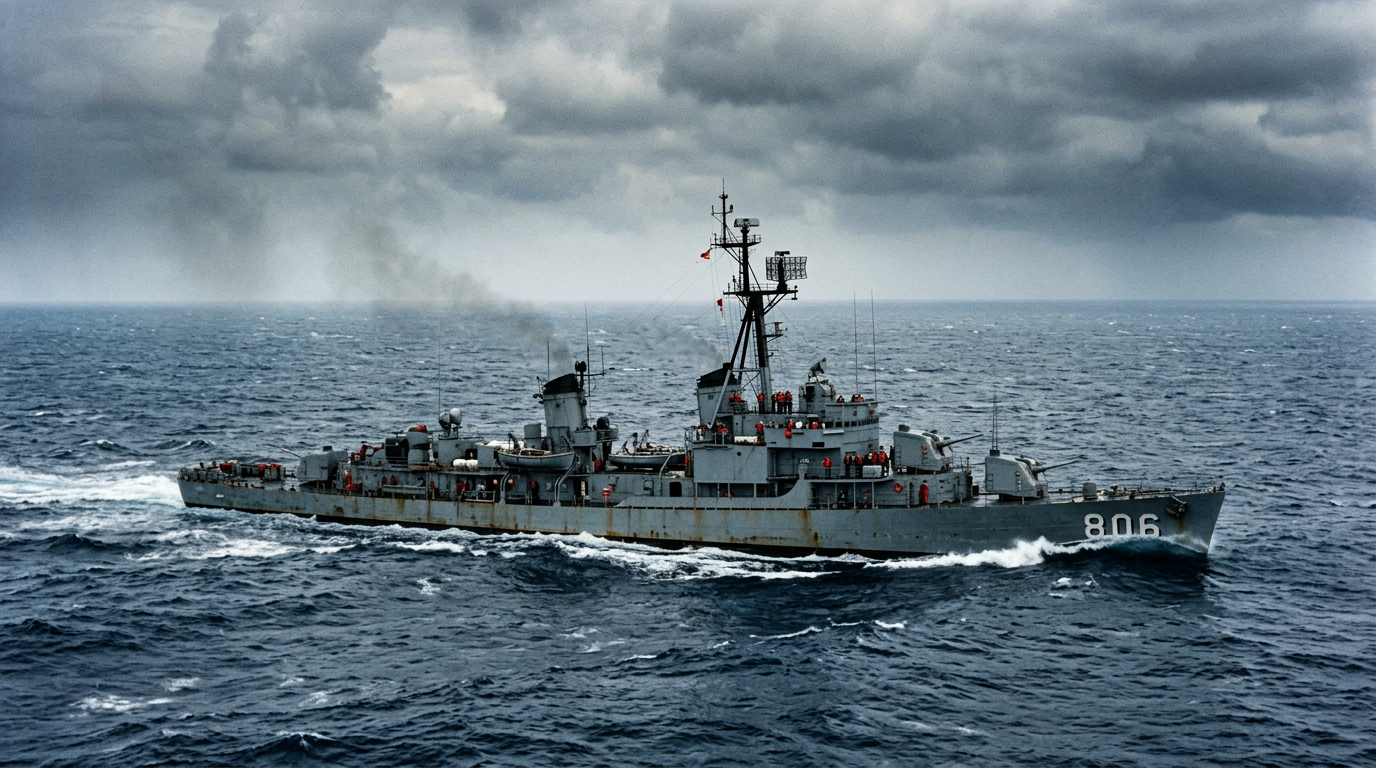
The Blue Water Navy benefit program extends benefits to veterans who served on ships in the offshore waters of Vietnam — acknowledging the Agent Orange (herbicide) exposure they experienced even without setting foot on Vietnamese soil. The Blue Water Navy Veterans Act of 2019 granted these veterans presumptive service connection for certain diseases, which simplifies the burden of proof and speeds up compensation.
Eligible veterans can claim a range of presumptive conditions — various cancers, type 2 diabetes, and Parkinson’s disease among them — and secondary conditions arising from those primary diseases may also be covered. To apply, submit **VA Form 21-526EZ** with your service and medical records.
Who is eligible
Veterans who served on ships in the offshore waters of Vietnam between January 9, 1962 and May 7, 1975, no more than 12 nautical miles seaward from the demarcation line of the waters of Vietnam and Cambodia, and who were discharged under conditions other than dishonorable. They are presumed to have been exposed to herbicides like Agent Orange.
Recognized vessels
Ships in the Blue Water Navy area
The VA recognizes many ships that operated within 12 nautical miles of Vietnam. The list below is a non-exhaustive sample — if your ship is not shown, that does not mean you are ineligible; check your deck logs and service records.
| Ship class | Example vessels |
|---|---|
| Aircraft carriers | USS Constellation (CVA-64), USS Enterprise (CVAN-65), USS Hancock (CVA-19), USS Midway (CVA-41), USS Oriskany (CVA-34) |
| Destroyers | USS Berkeley (DDG-15), USS Blue (DD-744), USS Buchanan (DDG-14), USS Coontz (DDG-40), USS Edwards (DD-950) |
| Cruisers | USS Belknap (DLG-26), USS Boston (CA-69), USS Canberra (CA-70), USS Chicago (CG-11), USS Long Beach (CGN-9) |
| Amphibious assault | USS Iwo Jima (LPH-2), USS Okinawa (LPH-3), USS Tripoli (LPH-10), USS Valley Forge (LPH-8) |
| Supply ships | USS Camden (AOE-2), USS Sacramento (AOE-1), USS White Plains (AFS-4), USS Mars (AFS-1) |
Presumptive conditions
Presumptive conditions and their secondaries
Presumptive conditions are health issues the VA automatically treats as service-connected for veterans who served in qualifying locations and times — you do not have to prove the condition was directly caused by service, which simplifies and speeds up the claim. Secondary conditions develop as a result of a service-connected primary condition and can be claimed for additional benefits (with medical evidence linking the two).
| Primary presumptive condition | Common secondary conditions |
|---|---|
| AL Amyloidosis | Heart disease, kidney failure, liver damage |
| Chronic B-cell Leukemias | Infections, anemia, lymph node enlargement |
| Chloracne (or similar acneform disease) | Skin infections, scarring |
| Diabetes Mellitus Type 2 | Peripheral neuropathy, diabetic retinopathy, kidney disease, cardiovascular disease |
| Hodgkin’s Disease | Secondary cancers, thyroid disorders, heart disease |
| Ischemic Heart Disease | Heart failure, arrhythmias, stroke |
| Multiple Myeloma | Bone fractures, kidney dysfunction, infections |
| Non-Hodgkin’s Lymphoma | Secondary cancers, heart disease, infections |
| Parkinson’s Disease | Depression, dementia, autonomic dysfunction |
| Peripheral Neuropathy (early-onset) | Chronic pain, infections, mobility issues |
| Porphyria Cutanea Tarda | Liver disease, chronic skin conditions |
| Prostate Cancer | Bone metastasis, urinary incontinence, erectile dysfunction |
| Respiratory Cancers (lung, bronchus, larynx, trachea) | COPD, pulmonary fibrosis, secondary cancers |
| Soft Tissue Sarcomas | Lymphedema, secondary cancers, chronic pain |
The PACT Act expands your coverage
Blue Water Navy veterans are also covered under the PACT Act (Honoring our PACT Act of 2022), which expands VA health care and benefits for those exposed to burn pits, Agent Orange, and other toxins — adding more presumptive conditions (additional cancers, respiratory issues, and more). Apply for these expanded benefits with **VA Form 21-526EZ** and your service and medical records.
Documenting exposure
The Agent Orange / Blue Water Navy registry
The Blue Water Navy Vietnam Veterans Registry collects and analyzes health information from veterans who served offshore, helping the VA monitor the long-term effects of herbicide exposure. Participating supports health monitoring, research, informed care, and better policy.
How to register
- Online — complete the form on the VA’s Agent Orange Registry webpage.
- By phone — call the VA Benefits Hotline at **800-827-1000**.
- In person — visit a local VA medical center or clinic.
- By mail — request the necessary forms from the VA and submit them by mail.
The registry is separate from your claim
The Agent Orange Registry program — which includes a free health exam and documentation of exposure — is separate from filing a claim. Participating does not affect your ability to file or the outcome of any claim you submit.

Reading up is smart. Having us in your corner is smarter.
You don’t have to navigate this alone. Ask us anything about your situation for free, or register when you’re ready to have an accredited agent handle your claim.
I read every one of these myself. If you qualify, you’ll hear from me within 48 hours. Or call 702-992-4883.
Want a second set of eyes on your claim?
Albert Thombs is an accredited VA claims agent (#45147). A free review will tell you what evidence your claim is missing and how to strengthen it — before you file.
Call 702-992-4883 · Mon–Fri, 11:00 – 18:00 Pacific