

2026 VA Home Loan Estimator
Estimate your monthly principal & interest and your one-time VA funding fee — then dig into the full fee schedule, funding-fee exemptions, entitlement and loan limits, and how a VA loan beats conventional and FHA. No down payment, no PMI.
Current VA funding fee rates (set by law)
A home loan with no down payment and no monthly mortgage insurance
The VA-backed home loan is one of the most valuable benefits you earned. It lets you buy with $0 down, no PMI, and no loan limit if you have full entitlement. Use the estimator below to see your monthly payment and funding fee, then read exactly how the fee works, who is exempt, and how it beats a conventional or FHA mortgage.
$0 down
With full entitlement
No PMI
Ever
No limit
Full entitlement

Why the VA loan is hard to beat
Six advantages a conventional mortgage simply cannot match.

$0 down payment
With full entitlement you can finance 100% of the price — no down payment required, as long as the appraisal supports the sale price.

No monthly mortgage insurance
VA loans never charge PMI. On a conventional loan with less than 20% down, PMI alone can add hundreds of dollars to your payment every month.
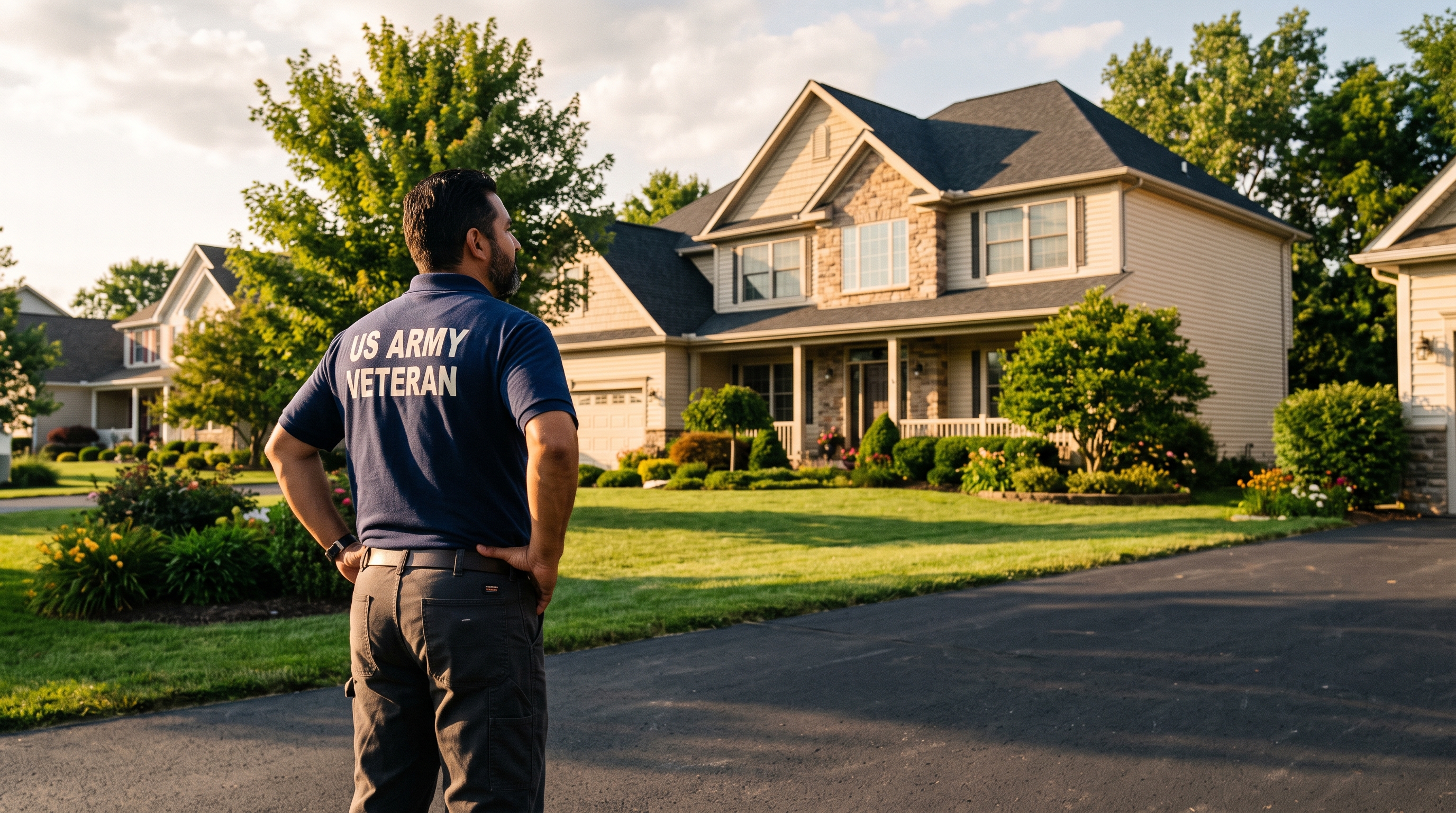
No loan limit with full entitlement
Since 2020, veterans with full entitlement have no VA loan limit — you can borrow whatever a lender approves with zero down.

Competitive rates, no credit-score floor
VA sets no minimum credit score and rates are typically among the lowest available. Lenders add their own overlays, but the VA guaranty keeps pricing sharp.

Reusable for life
The benefit never expires. Once you pay off or sell, your entitlement is restored and you can use it again — as many times as you qualify.

No prepayment penalty
Pay extra or pay it off early whenever you want. VA loans cannot charge a penalty for getting ahead of your mortgage.
The money a VA loan quietly saves you
The funding fee gets all the attention, so veterans fixate on it as a “cost” and miss the bigger picture: the VA loan removes the two most expensive parts of a conventional mortgage — the down payment you have to save up and the monthly mortgage insurance you can’t avoid with less than 20% down. Here is what that looks like on a $350,000 example home.
What you don’t have to bring
$350,000 example home · first-use purchase · $0 down
- Down payment vs. a 5%-down conventional loan
- $17,500 not needed
- Down payment vs. 20% down to dodge PMI
- $70,000 not needed
- Monthly PMI a conventional loan would add
- $146–$248/mo
- That PMI over a year
- $1,750–$2,975/yr
Conventional PMI doesn’t stop until you reach 20% equity — commonly 7 to 11 years — so that yearly PMI quietly stacks into $12,000 to $30,000+ before it ever drops off. A VA loan never charges it at all.
The one honest tradeoff
The one-time VA funding fee
$7,525
2.15% first-use fee on a $350,000 loan · $0 if you’re exempt
That fee sounds like a cost until you set it next to what you’re not paying. You skip a $17,500 down payment and roughly $146–$248 a month in PMI — so the fee is typically earned back inside the first couple of years, and it can be rolled into the loan instead of paid in cash at closing.
The $350,000 price, the 5% and 20% down comparisons, and PMI at 0.5%–0.85% of the loan per year are illustrative estimates — your real numbers depend on price, credit, and lender. The 2.15% first-use funding fee and the $0 exemption are current VA figures.
Estimate your payment & funding fee
Enter your numbers to see your monthly principal & interest, your one-time VA funding fee, and what the loan costs over its full term.
Loan details
VA loans allow $0 down. A larger down payment lowers your funding fee.
Loan breakdown
Enter a home price above and your base loan, funding fee, interest, and total cost will break down here, line by line.
Enter your home price
Your estimated monthly payment, one-time funding fee, and total financed will appear here.
Free & no obligation — talk through your COE, funding fee, and options.
Every VA funding fee, in one table
The funding fee is a one-time charge that helps keep the VA loan program running at no cost to taxpayers. It depends on your loan type, your down payment, and whether it’s your first VA loan. The row matching your current inputs is highlighted.
| Loan type | First use | Subsequent use |
|---|---|---|
| Purchase / construction — less than 5% downYou | 2.15% | 3.3% |
| Purchase / construction — 5% to 9.99% down | 1.5% | 1.5% |
| Purchase / construction — 10% or more down | 1.25% | 1.25% |
| Cash-out refinanceDown payment does not change this fee. | 2.15% | 3.3% |
| Interest Rate Reduction Refinance (IRRRL / streamline) | 0.5% | 0.5% |
| Loan assumption | 0.5% | 0.5% |
| Manufactured home | 1.0% | 1.0% |
| Native American Direct Loan (NADL)1.25% to buy or build, 0.5% to refinance. | 1.25% | 0.5% |
Exempt veterans pay $0. If you receive VA disability compensation — any rating — the funding fee disappears entirely. More on that below.
VA loan vs. conventional vs. FHA
The funding fee sounds like a downside until you compare it to what other loans charge every single month. Here’s the honest breakdown.
| Feature | VA loan | Conventional | FHA |
|---|---|---|---|
| Minimum down payment | $0 with full entitlement | Typically 3%–20% | 3.5% |
| Monthly mortgage insurance | None, ever | PMI if under 20% down | Annual MIP for the life of most loans |
| Upfront insurance / fee | One-time funding fee (waivable) | None | 1.75% upfront MIP |
| Loan limit | None with full entitlement | Conforming limit applies | County FHA limit applies |
| Minimum credit score | No VA minimum (lender sets it) | Usually 620+ | 580 for 3.5% down |
| Who can use it | Eligible veterans & service members | Anyone who qualifies | Anyone who qualifies |
What you can use your VA loan for
It’s more than a purchase loan. The same entitlement covers building, improving, refinancing, and more.

Buy a home
Purchase a house, condo in a VA-approved project, or multi-unit property you will live in.

Build or improve
Finance new construction or roll energy-efficient improvements into the loan.

Refinance (IRRRL)
Lower your rate on an existing VA loan with a streamline refinance and a 0.5% fee.

Cash-out refinance
Tap your equity — even from a non-VA loan — and refinance into a VA loan.
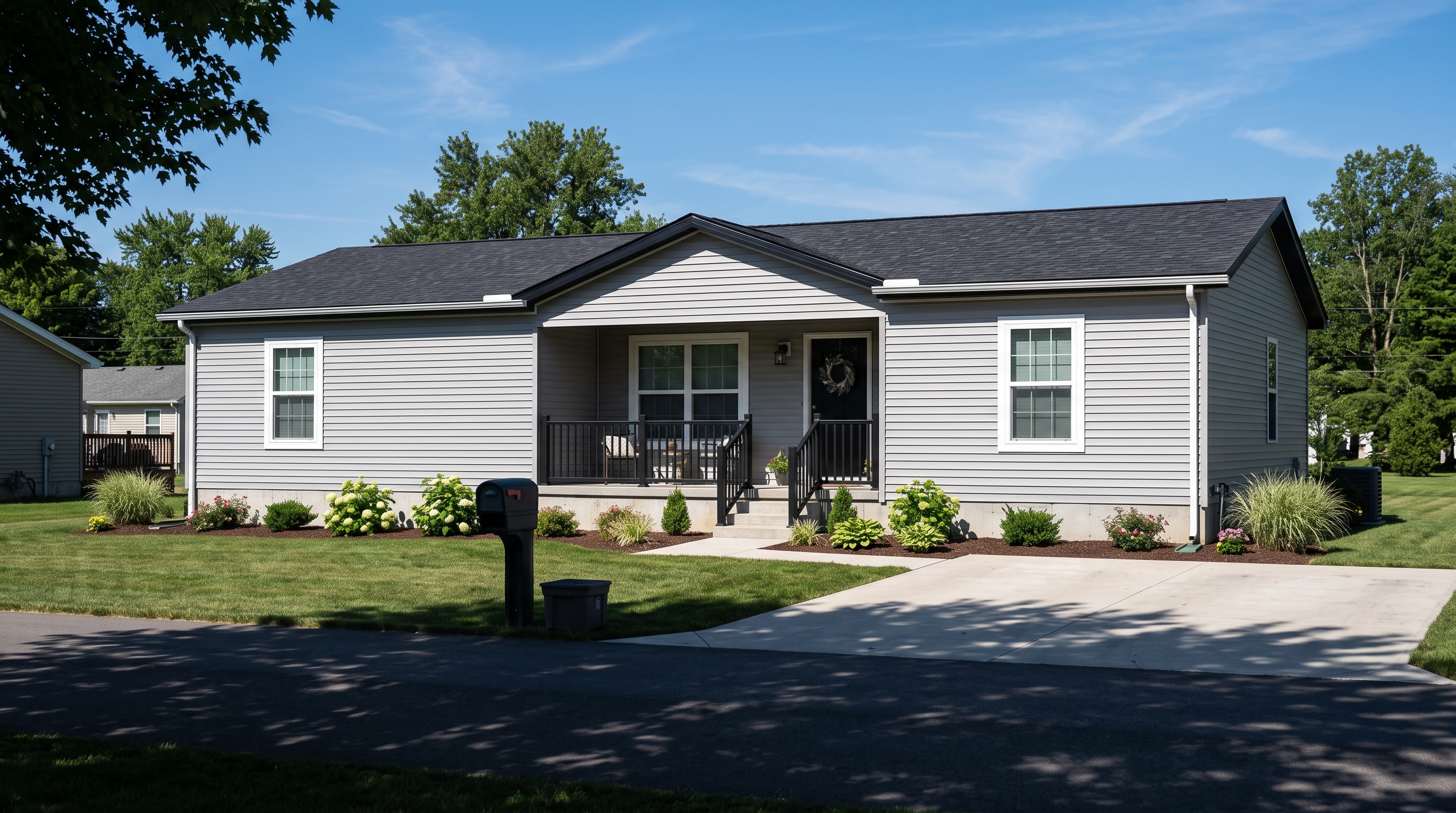
Manufactured home
Buy a manufactured home or lot at a reduced 1.0% funding fee.

Reuse the benefit
Restore entitlement after a payoff or sale and use your VA loan again.
Entitlement & loan limits, explained
“Entitlement” is the dollar amount the VA guarantees to your lender. It’s what makes zero-down lending possible — and whether yours is full or partial decides if a loan limit applies.
No loan limit at all
If you’ve never used your VA loan, or you’ve paid off a prior VA loan and sold the home, you have full entitlement. Since the Blue Water Navy Act took effect in 2020, there is no VA loan limit — you can borrow whatever a lender approves with $0 down, as long as the appraisal supports the price.
County limit applies
If you already have an active VA loan, or your entitlement wasn’t restored after a prior use, your zero-down amount is tied to the county conforming limit. The 2026 baseline is $832,750 for a one-unit home (higher in high-cost areas). You can still buy above it — you just may need a down payment on the difference.
The partial-entitlement math, step by step
- 1Take your county loan limit (2026 baseline: $832,750).
- 2Multiply by 25% to get the maximum guaranty for that county.
- 3Subtract the entitlement you’ve already used on your current loan.
- 4Multiply what’s left by 4 — that’s your zero-down purchase power.
IRRRL streamline refinances are exempt from county limits. Check current loan limits at VA.
Who is exempt from the funding fee
The funding fee can run into the tens of thousands of dollars — but a large group of veterans pay nothing at all. You’re exempt if any of these apply:
- You receive VA compensation for a service-connected disability — any rating, including 10%
- You are eligible for VA compensation but receive retirement or active-duty pay instead
- You are a Purple Heart recipient serving on active duty on or before closing
- You are a surviving spouse receiving Dependency and Indemnity Compensation (DIC)
- You have a pre-discharge disability memo or proposed rating dated before closing
Your Certificate of Eligibility shows your exemption status. And if you paid the fee and are later awarded disability compensation with an effective date on or before your closing date, you can apply for a refund of the entire fee.
Here’s the part most veterans miss
A single service-connected disability rating makes you 100% funding-fee exempt — saving thousands on this loan — and it can trigger a refund if you already paid the fee. Getting veterans rated is exactly what our accredited agent and disability advocates do. If you have a condition connected to your service and no rating yet, that’s money left on the table on top of the monthly compensation you’d be owed.
How to get a VA loan, step by step
It starts with your Certificate of Eligibility and ends with the keys. Here’s the order.
- 1
Step 1
Get your COE
Your Certificate of Eligibility proves to lenders you qualify. Most lenders can pull it instantly, or you can request it yourself.
- 2
Step 2
Get pre-approved
A VA-savvy lender reviews your income, credit, and entitlement and issues a pre-approval so you know your budget.
- 3
Step 3
Find your home & make an offer
Shop with an agent who understands VA loans. The home must be one you will live in as your primary residence.
- 4
Step 4
VA appraisal & MPRs
A VA appraiser confirms the value and checks it meets Minimum Property Requirements for a safe, sound, sanitary home.
- 5
Step 5
Close & move in
Sign, pay any funding fee (or roll it in), and get the keys. You must occupy the home, typically within 60 days.
Request your COE yourself with VA Form 26-1880 (Request for a Certificate of Eligibility), or let your lender pull it in seconds. A surviving spouse requests a COE with VA Form 26-1817.
Surviving spouses can use the VA loan too
If you’re the surviving spouse of a veteran who died from a service-connected condition — or who was totally and permanently disabled — you may be eligible for your own VA-backed home loan, and you’re exempt from the funding fee. Surviving spouses receiving DIC are exempt as well.
$0 fee
Funding fee exempt
$0 down
Same zero-down benefit
26-1817
COE request form
VA home loan questions, answered
Do I have to live in the home?
Yes. A VA loan is for a primary residence you will occupy, usually within 60 days of closing. You cannot use it to buy a pure investment property or vacation home, though you can buy a multi-unit property if you live in one of the units.
Can I use my VA loan more than once?
Yes. The benefit is reusable. Once you pay off or sell a home and restore your entitlement, you can use it again. In some cases you can even have two VA loans at the same time if you have enough remaining entitlement — for example, after a PCS move.
What credit score do I need?
The VA sets no minimum credit score. Individual lenders set their own thresholds (often around 580 to 620), so shopping more than one lender matters. The VA guaranty is what lets lenders say yes with lower scores and no down payment.
What are the VA appraisal and Minimum Property Requirements?
Before a VA loan closes, a VA-assigned appraiser confirms the home is worth the price and meets Minimum Property Requirements (MPRs) — meaning it is safe, structurally sound, and sanitary. It protects you from overpaying for a home with serious problems.
Is there a prepayment penalty?
No. You can make extra payments or pay off a VA loan in full at any time with no penalty. That makes it easy to pay down principal faster and save on interest.
What if I fall behind on payments?
The VA has loan technicians who can step in and work with your servicer to explore options like repayment plans, forbearance, or loan modification. VA financial counseling has helped many veterans avoid foreclosure — contact them early if you are struggling.

The fastest way to a $0 funding fee
We don’t originate mortgages — so we’ll give it to you straight. The single biggest lever on a VA loan is a service-connected disability rating: it waives your funding fee entirely and can refund one you already paid. Getting veterans rated is our specialty. Let’s see what you’re owed.
About this benefit
A VA-backed home loan is a mortgage from a private lender that the VA partially guarantees. That guaranty lets lenders offer better terms — often with no down payment and no private mortgage insurance.
Most borrowers pay a one-time VA funding fee, which can be rolled into the loan. Veterans receiving disability compensation and certain others are exempt from the fee.
How to use it
- 1Enter the home price and any down payment you plan to make.
- 2Set your interest rate and choose a 15- or 30-year term.
- 3Check the boxes for first vs. subsequent use and funding-fee exemption.
- 4Review your monthly payment, funding fee, and no-PMI savings — then read the full guide below.
What it covers
- Monthly principal & interest and total paid over the loan
- The full VA funding-fee schedule for every loan type
- Who is exempt from the funding fee (and how to get a refund)
- Entitlement, loan limits, and VA vs. conventional vs. FHA
Official VA links
Work with our accredited agent and disability advocates
Ready to turn this estimate into a claim? Let a specialist handle it.
Calculators are a starting point. Both options below are free. Have questions? Get a free case evaluation — no paperwork, nothing to sign. Ready to hire us? Register with us: it’s free to register, and involves signing VA Form 21-22a so we can act on your claim.
This calculator is an estimate. Actual loan terms, rates, and the funding fee depend on your lender and VA eligibility. VA Benefits Calculators is not affiliated with the VA — the VA makes all final decisions about eligibility and payment amounts. Always confirm details at va.gov.